
BLOG
POPULAR ARTICLES

/
BLOG
What Matters Most When Selecting an rPET Black Masterbatch Supplier
23 March, 2026
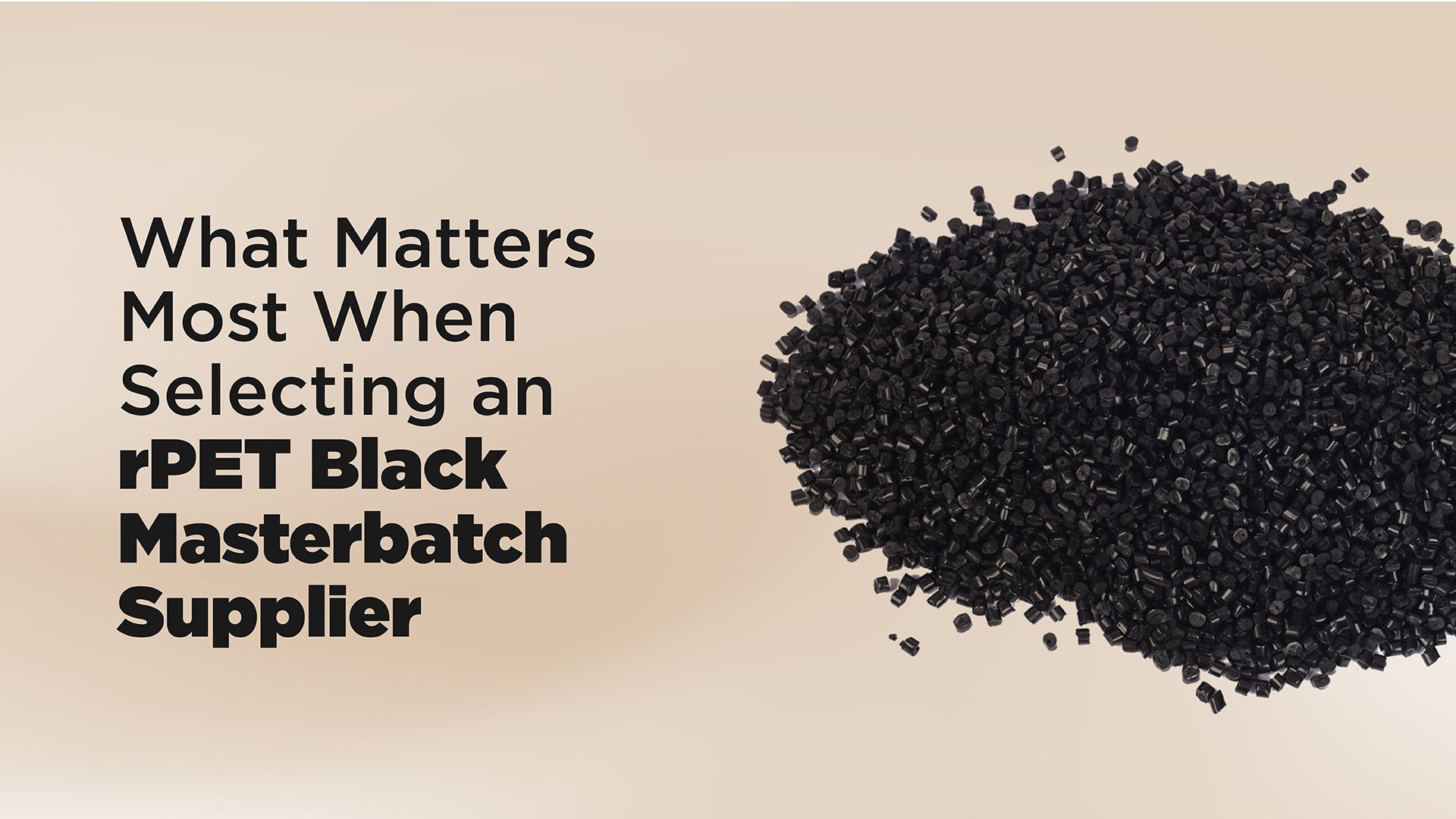
In today’s plastics and packaging landscape, buying teams look far beyond colour alone. They look at consistency, process performance, application fit and the larger sustainability story behind every input. This becomes more important when the material is used across packaging, sheets, fibres and other high-volume applications. For manufacturers using rPET black masterbatches, the supplier directly influences how the product turns out on the line and how it is received in the market.
As recycled materials become more widely adopted, expectations have also shifted. Buyers are no longer evaluating masterbatch in isolation. Buyers are now looking at how it behaves alongside recycled PET chips, actual processing conditions and the final application. Because of this, choosing a supplier takes a bit more thought than it used to.
A strong supplier relationship begins with a simple question: can this partner deliver repeatable performance batch after batch? Black masterbatch plays a major role in shade depth, dispersion, opacity and processing stability. A dependable supplier helps maintain that balance so converters can run smoother operations and achieve a cleaner final look across bottles, containers, sheets and fibres. Pashupati Group highlights these very outcomes in its product communication around reliable jet-black shade, improved processing and uniform dispersion.
Start with Application Understanding
Every end use asks for something slightly different. A packaging line may prioritise opacity and visual consistency. A sheet producer may focus on dispersion and melt behaviour. A fibre-related application may care more about uniformity during downstream conversion. That is why one of the first things to evaluate is whether the supplier understands the exact application and recommends the right grade accordingly.
A supplier with strong application knowledge adds value from the very first conversation. Instead of offering a standard solution, they look at processing conditions, output expectations and the role the masterbatch will play in the final product. This reduces the trial-and-error phase and helps buyers reach stable production faster.
This becomes even more important in integrated manufacturing environments where material streams connect across product categories. Many buyers work with recycled PET chips, granules and masterbatches as part of one broader recycled material strategy. In such cases, supplier capability across related rPET formats becomes a practical advantage because it supports smoother planning, better technical alignment and stronger control over finished product quality.
It also allows manufacturers to align colour performance with base material behaviour.When the masterbatch and the base resin align well, the output tends to stay more consistent, both in appearance and performance.
Look Closely at Dispersion and Colour Consistency
For black masterbatch, consistency is a clear marker of supplier quality. Uneven dispersion affects finish and appearance, and even small variations become visible at scale. In large production setups, slight shade differences between batches can impact the final product and brand perception. This is why control over pigment distribution, pellet quality and processing behaviour matters.
With black masterbatch, consistency shows up immediately. The shade needs to stay the same and the dispersion needs to hold across runs. That is what keeps production steady and avoids rework later. For converters and brand owners, that reliability matters more than anything else when timelines are tight.
Buyers often evaluate this through sample runs, lab testing and production trials. A supplier that performs consistently across these stages builds confidence early in the relationship.
Evaluate Processing Performance in Real Plant Conditions
A masterbatch has to perform on the shop floor, not just on paper. Suppliers who understand line speed, melt behaviour and feeding patterns deliver more stable results. Small issues like irregular feeding or shifting melt behaviour add up over time, affecting cost and quality. Smooth processing supports consistent output.
This is where it helps to work with a supplier who understands how the material behaves inside an actual plant setup. Pashupati Group’s published material on black masterbatches points to outcomes such as cleaner feeding, steadier dispersion and smoother processing at higher line speeds. These are practical indicators of a supplier who speaks the language of converters and understands the realities of plant performance.
When processors choose a supplier with that level of practical grounding, the value often shows up in daily efficiency as much as in final appearance. Production becomes more predictable, downtime reduces and teams spend less time troubleshooting avoidable issues.
Check the Wider rPET Ecosystem Behind the Supplier
It also helps to look at what else the supplier handles. Companies working across flakes, granules, masterbatches, yarn and fibre tend to understand the full recycling chain better. That kind of exposure usually reflects in how they manage quality and consistency.
Pashupati Group lists rPET products across flakes, granules and masterbatches, alongside yarn and fibre offerings. That broader ecosystem can support customers who source for multiple applications and prefer a partner with a more complete understanding of recycled material flows.
This becomes particularly useful when manufacturers are working with multiple product lines. A supplier with experience across different rPET formats can offer better insight into how materials interact, how performance can be optimised and how consistency can be maintained across batches.
rPET chips textile grade and rPET chips food grade reveal how well a supplier understands different applications. Textile-grade material must run smoothly and absorb colour evenly, while food-grade material must meet stricter standards. A supplier working across both shows stronger application awareness.
Capacity, Infrastructure and Supply Continuity Matter
Quality matters, but so does supply continuity. A supplier with strong scale and a stable production network makes planning easier. Supply disruptions can delay deliveries and affect commitments, so consistency in supply is just as important as product quality.
Scale matters as well. A supplier with multiple plants, steady output and a global presence is better equipped to handle consistent supply of rPET black masterbatches and other materials. For buyers working with regular volumes, that kind of stability reduces a lot of uncertainty.
It also helps during demand fluctuations. When requirements increase or supply chains tighten, a stable supplier is usually better prepared to keep things moving without affecting quality.
Sustainability Claims Should Come with Operational Depth
Recycled materials now shape brand positioning, so buyers look at how they are processed, not just how they are presented. Sustainability includes processing efficiency, waste recovery and batch consistency, all of which affect performance and perception.
On its official website, Pashupati Group presents its recycling work in terms of landfill space saved, crude oil consumption saved, heat energy conserved and greenhouse gas reduction. The group also positions its rPET portfolio as part of a larger mission to convert waste into premium sustainable products.
For buyers, this adds more confidence. Sustainability carries more weight when it comes from established recycling operations rather than surface claims. It points to a system that is already working at scale.
Technical Support Builds Stronger Outcomes
The best suppliers go beyond supply and support grade selection and performance improvement. Small changes in formulation or processing can improve output, and a technically involved supplier helps achieve this faster.
Because of this, buyers tend to benefit more from suppliers who understand how masterbatch performance connects with recycled PET chips, granules and final applications. A supplier with this wider view is better placed to support both performance and business growth.
Over time, this kind of collaboration improves efficiency. Both sides develop a clearer understanding of what works, which leads to more stable and predictable production.
Choosing the Right Partner
Choosing the right supplier for rPET black masterbatches requires a balanced approach. Shade consistency matters. Dispersion matters. Processing behaviour matters. Capacity, grade range and sustainability credibility also play a role. Together, they influence how the material performs in actual production conditions.
When considered together, these factors make supplier selection clearer. Buyers can evaluate suppliers as long-term partners supporting both quality and efficiency. With its broad rPET range and experience across applications, Pashupati Group fits well into this role.
FAQ's
RECENT BLOGS

 (Large).jpg)