BLOG
POPULAR ARTICLES

/
BLOG
How Polypropylene Reinforcement Fiber Improves Early Strength and Stability in Cement Structures
24 April, 2026
In the first few hours after placement, concrete is still settling into itself. Moisture moves upward, the surface begins to dry out and the top layer starts tightening even though the slab has not yet developed enough strength to resist tension. That is where plastic shrinkage cracks appear. They often show up as fine surface lines, yet they can affect finish quality, surface continuity and long-term service life.
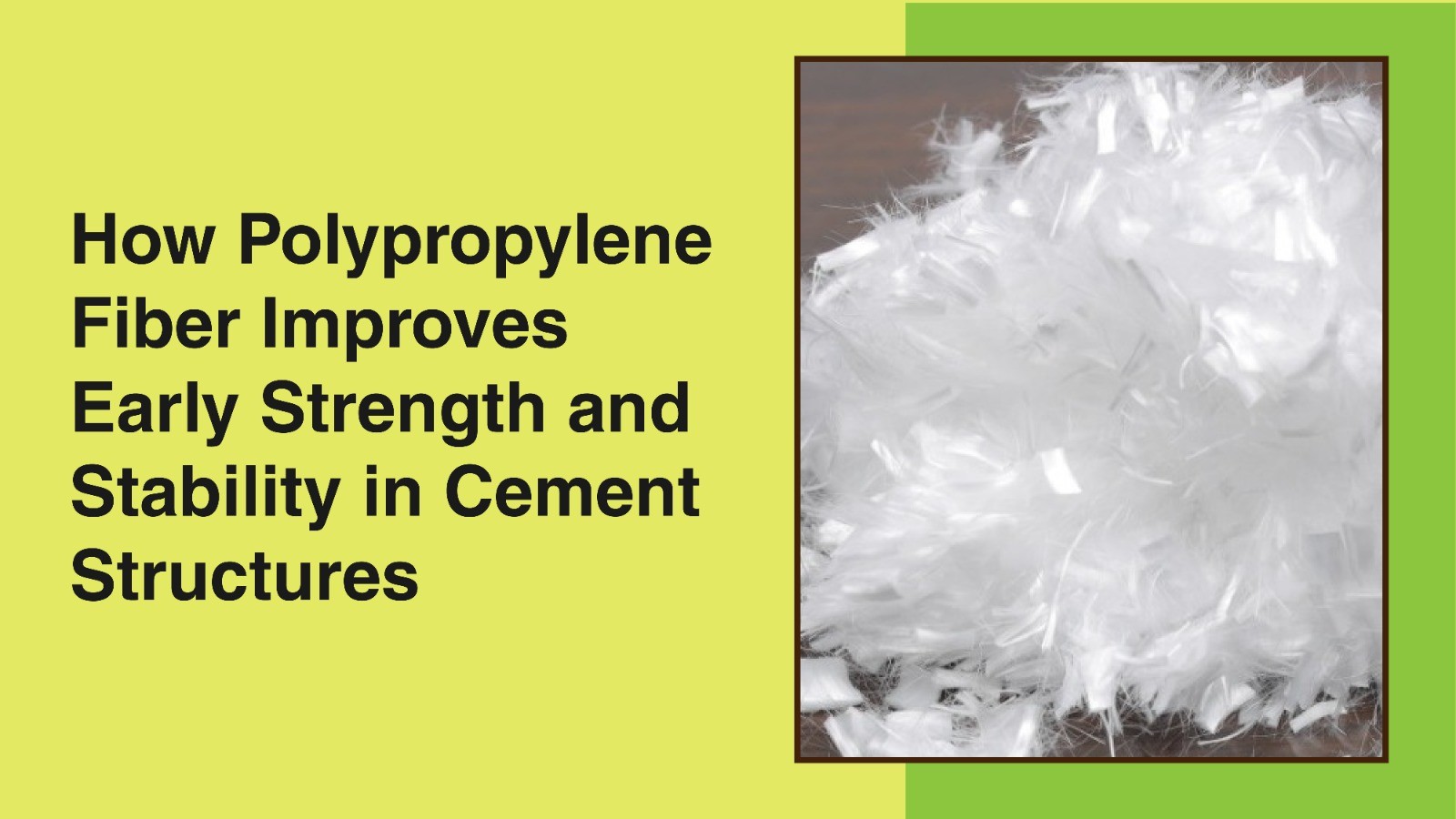
A practical way to manage that early risk is to use a reinforcement fiber dispersed through the mix. In this category, polypropylene reinforcement fiber has become a common choice because it is light, chemically stable in cementitious systems and easy to dose during batching. Instead of concentrating resistance at one point, the fibers spread support across the full volume of fresh concrete.
For buyers researching the category through Pashupati Group or through the wider market, the useful question is simple: how does the material work inside the slab, and where does it create value on site? That answer starts with the behaviour of fresh concrete itself.
Why Plastic Shrinkage Cracks Form with Polypropylene Reinforcement Fiber
Plastic shrinkage cracks show up during the early stage, when the concrete is still workable and has not set. They usually start when the surface loses moisture faster than the mix can replace it from within. When evaporation outpaces bleed water, the top skin contracts. The body of the concrete remains wetter and more stable. That mismatch creates tensile stress near the surface.
Once the stress crosses the fresh mix’s limited tensile capacity, cracking starts.
The risk climbs under these site conditions:
- High wind speed across the slab
- Warm ambient temperature
- Low relative humidity
- Hot formwork or subgrade
- Large exposed pours with broad surface area
- Delays in finishing or curing
This issue matters on industrial floors, pavements, driveways, deck slabs, repair toppings and plaster-rich applications where surface quality carries commercial value.
What Polypropylene Reinforcement Fiber Does Inside The Mix
Polypropylene reinforcement fiber works as a distributed internal network. Each fiber sits within the cement paste and aggregate matrix. As micro-separation begins, the fibers bridge tiny openings and help spread the stress across a larger zone.
That creates three direct effects:
Crack Bridging by Reinforcement Fiber
Fibers sit across small openings as they begin to form and help limit how wide those gaps can grow.
Stress Distribution Through Polypropylene Reinforcement Fiber
Instead of stress building up along a single weak line, it spreads more evenly through the mix.
Fresh Mix Cohesion with Reinforcement Fiber
The concrete behaves more uniformly during placing and finishing, with less separation across the surface layer.
This is why polypropylene reinforcement fiber is associated with plastic shrinkage control rather than just general strengthening language. Its first job is early-age crack management.
Why Distributed Reinforcement Fiber Matters
Plastic shrinkage cracking is a surface-wide event. It rarely starts at one neat point. It develops across the slab as moisture leaves the top layer. That is why distributed reinforcement fiber is useful at this stage.
A localized solution cannot match the reach of a fiber network dispersed through the concrete. The fibers work through the whole placement area, including edges, corners and restrained zones where stresses often intensify.
That broader coverage helps in these ways:
- Fewer visible hairline cracks
- Tighter crack width
- Better surface consistency
- Cleaner base for coatings and sealers
- Lower patching demand after placement
For contractors, that means better control during a critical window when the slab is still vulnerable and site speed is high.
Common Types of Polypropylene Reinforcement Fiber Used In Concrete
Polypropylene fibers come in different forms, and selection depends on the target outcome. A descriptive view helps.
PP Microfiber
PP microfiber is usually selected for plastic shrinkage crack control. The small filaments spread densely through the mix and act early, when the slab is still fresh. For many builders, this is the most relevant option when the goal is surface crack reduction during the plastic stage.
Polypropylene Reinforcement Fiber
This is the broader category term used in procurement and product discussions. It may cover micro or macro grades depending on geometry, intended dosage and performance target.
Virgin Polypropylene Fiber
Virgin polypropylene fiber uses prime polymer feedstock. Buyers may prefer it when consistency, cleanliness and controlled physical properties sit high on the selection list.
The key is matching the fiber format to the job. Early shrinkage control generally points toward PP microfiber. Toughness-focused applications may move toward larger fiber formats.
Where Polypropylene Reinforcement Fiber Delivers The Most Value
Polypropylene fibers earn their place in concrete where the slab surface faces evaporation pressure and finish expectations at the same time.
Typical applications include:
- Industrial floors
- Warehouses
- Internal roads
- Pavements
- Parking areas
- Deck slabs
- Thin screeds
- Repair mortars
- Precast elements
- Plaster and render systems
The value becomes clearer in hot weather regions, windy sites and wide pours where moisture leaves the top surface fast. In those environments, a distributed reinforcement fiber often supports better finish retention and more predictable surface behaviour.
Selection Factors for Polypropylene Reinforcement Fiber Buyers
Choosing a fiber grade is usually less about headline claims and more about fit. A practical review should cover the following points.
Project Exposure
Outdoor slabs, hot sheds and windy placements face greater evaporation stress.
Desired Outcome
Plastic shrinkage control, finish quality, residual toughness and crack width control point toward different fiber formats.
Fiber Geometry
Length, diameter and shape affect dispersion and performance.
Mix Design Compatibility
Cement content, fines level, admixtures and workability targets influence how the fiber behaves during batching and placement.
Dosage Range
Too little reinforcement fiber weakens the network effect. Proper dosage aligns with the slab condition, finish requirement and supplier guidance.
Curing Plan
Fiber supports crack control. Curing supports moisture retention. The best outcome comes from both working together.
This is where technical review matters more than marketing language.
Mixing and Placement of Polypropylene Reinforcement Fiber
Fiber performance depends heavily on distribution. Even a good material can underperform when the addition method is rough or rushed.
Site teams usually get better results with this approach:
- Add the fiber gradually into the mixer
- Maintain adequate mixing time for dispersion
- Review slump or workability after addition
- Fine-tune admixture dosage where needed
- Finish in line with actual bleed behaviour
- Start curing early
A polypropylene reinforcement fiber network helps during the plastic stage. Good site handling helps the network do its job. Together they produce tighter surfaces and steadier performance.
Polypropylene Fiber Price and Procurement Reality
Buyers often search polypropylene fiber price before they study the application. That is understandable. Cost matters. Yet price alone gives an incomplete picture.
What Affects Polypropylene Fiber Price?
Polypropylene fiber price usually shifts with:
- Fiber type
- Virgin or recycled feedstock route
- Geometry and cut length
- Packaging format
- Order volume
- Supply location
- Brand support and technical documentation
A cheap reinforcement fiber that disperses poorly or arrives with variable geometry can create site headaches. A well-matched product can reduce crack-related rework, improve finish quality and support better lifecycle value.
In practice, procurement teams often compare price against three outcomes:
- Surface crack control
- Ease of mixing and placing
- Overall impact on repair and finishing cost
That is a more useful commercial lens than price alone.
At Pashupati Group, sustainable plastic recycling supports the development of industrial-grade polypropylene solutions that combine performance with responsible material use.
Practical Takeaway on Polypropylene Reinforcement Fiber
Concrete loses moisture fast during its earliest hours, and that is when plastic shrinkage cracks begin. A polypropylene reinforcement fiber helps by forming a distributed internal network through the fresh mix. The fibers bridge micro-openings, spread stress and support fresh mix cohesion. The result is tighter crack control during a stage when concrete remains weak in tension.
For buyers evaluating PP microfiber or virgin PP fiber, the smartest route is performance-based selection. Review the site exposure, the slab geometry, the curing plan and the finishing expectations. Then match the reinforcement fiber to the job.
That is the practical value of this category. It gives the concrete a better chance to stay intact during the first vulnerable hours, which often shapes the quality of everything that follows.
FAQ on Polypropylene Reinforcement Fiber
What Is The Main Purpose Of Polypropylene Fiber In Fresh Concrete?
Its main purpose is early crack control. The fiber bridges tiny openings during the plastic stage and helps reduce the spread of surface shrinkage cracks.
Is PP Microfiber Used For Plastic Shrinkage Crack Control?
Yes. PP microfiber is widely used for this role because the small filaments distribute closely through the mix and act during the early drying period.
How Does Virgin Polypropylene Fiber Differ From Other Grades?
Virgin polypropylene fiber is made from prime polymer feedstock. Buyers often associate it with cleaner consistency, stable geometry and predictable batching performance.
Does Polypropylene Fiber Price Depend Only On Quantity?
Quantity matters, though several other factors also affect pricing. Fiber geometry, packaging, feedstock type, logistics and technical support can all influence polypropylene fiber price.
Can Polypropylene Reinforcement Fiber Replace Steel Reinforcement?
Polypropylene reinforcement fiber helps control shrinkage cracks and improves durability, but it does not fully replace structural steel reinforcement in load-bearing concrete applications.
Is Polypropylene Fiber Suitable For Ready-Mix Concrete?
Yes. Polypropylene fiber is commonly used in ready-mix concrete because it mixes easily, improves crack resistance, and supports better surface performance during placement.
Does Reinforcement Fiber Affect Concrete Workability?
FAQ's
RECENT BLOGS
 (Large).jpg)