BLOG
POPULAR ARTICLES

/
BLOG
How EPR Is Reshaping Plastic Waste Management for a Greener Future
31 March, 2026
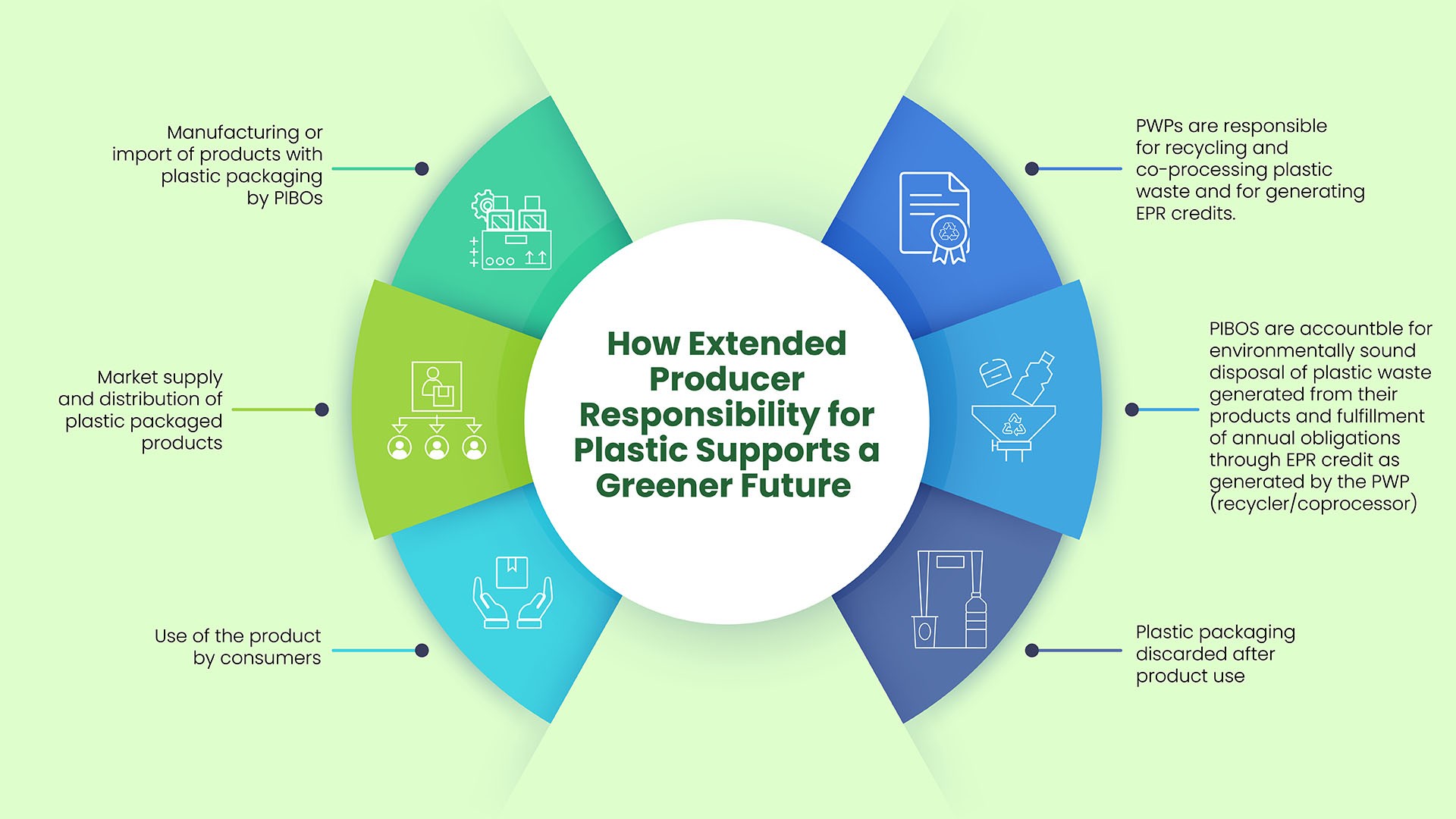
The real challenge with plastic begins after it is used, when discarded waste needs to be recovered and managed responsibly. Extended Producer Responsibility (EPR) addresses this by holding producers accountable for the entire lifecycle of the plastic they introduce into the market.
EPR has gained strong relevance in sustainability discussions because it shifts focus to what was once treated as an afterthought. Instead of ending responsibility at the point of sale, it extends accountability to collection, recycling, and environmentally sound processing after consumption.
Understanding EPR in Simple Terms
In practical terms, Extended Producer Responsibility means a company’s role does not stop once the product is sold. It also covers how that plastic packaging waste is collected, tracked and sent back into recycling systems.
This matters because plastic waste rarely stays where it is discarded. It gets carried into streets, empty plots, drains and nearby water channels. Once it is mixed into these spaces, collection becomes slower, costlier and much harder to manage properly. EPR creates a structure that pulls this material back into an organised loop before it loses value.
In India, this responsibility is defined through plastic waste management rules and compliance systems that focus on recovery, recycling, reporting, and proper processing. The framework primarily involves two groups: Producers, Importers, and Brand Owners (collectively referred to as PIBOs), and waste processors such as recyclers, co-processors, and Plastic Waste Processors (PWPs), who convert waste into usable materials or products.
EPR Under India’s Plastic Waste Management Rules
EPR in India comes under the Plastic Waste Management Rules introduced in 2016, with later updates adding stricter reporting and accountability.
Under these rules:
- Producers, importers and brand owners (PIBOs) must register on the centralised portal
- Annual targets are set for the collection and recycling of plastic waste, which are met through EPR credits issued by PWPs.
| PLASTIC PACKAGING CATEGORY | 2024-25 | 2025-26 | 2026-27 | 2027-28 and Onwards |
| CATEGORY I | 50 | 60 | 70 | 80 |
| CATEGORY II | 30 | 40 | 50 | 60 |
| CATEGORY III | 30 | 40 | 50 | 60 |
| CATEGORY IV | 50 | 60 | 70 | 80 |
- Obligations are defined based on the volume and type of plastic introduced into the market
- Documentation, traceability, and reporting are mandatory on the EPR portal, along with the filing of annual reports each financial year.
To keep this system measurable, mechanisms like EPR certificates are used as proof that a defined quantity of plastic waste has actually been processed through authorised recyclers.
What used to be a broad responsibility is now tied to numbers, documentation and verification, making compliance something that has to be demonstrated, not assumed.
Categories of Plastic Waste Under EPR
Plastic waste under EPR is divided into four categories, because packaging does not all behave the same once it enters the waste stream.
- Category I covers rigid formats such as bottles and containers
- Category II includes flexible plastics like carry bags, films and sheets
- Category III refers to multi-layered packaging that combines plastic with other materials
- Category IV includes compostable plastic sheets and carry bags
Why EPR Matters: The Multi-Faceted Benefits
EPR affects more than just waste handling. Its impact shows up across environmental outcomes, resource use and how businesses approach packaging decisions.
Environmental Impact
- Reduces plastic ending up in open areas, drains and water bodies
- Increases recycling and lowers landfill load
Resource Efficiency
- Brings post-consumer plastic back into production cycles
- Reduces dependence on virgin raw materials
System Accountability
- Introduces traceability and structured reporting
- Makes waste flows measurable and auditable
Business-Level Impact
- Forces better plastic packaging decisions
- Encourages design for recyclability and material optimisation
Overall, plastic starts getting handled as a managed material instead of just waste.
Why EPR Matters More Than Ever
Companies are paying more attention to how their plastic packaging waste is collected, processed and returned into use with tighter reporting and closer compliance checks. Collection has become more intentional. Recycling has become more measurable. Accountability has become far more visible.
This has a direct effect on how the overall system behaves. When businesses know they are responsible for recovery targets and compliance records, the flow of waste starts becoming more organised. Material is more likely to enter a defined chain instead of slipping into scattered disposal pathways. That is where EPR for plastic waste begins to show real environmental value. It improves traceability, encourages recovery and supports a more circular use of plastic.
It also changes business thinking. Packaging decisions begin to include questions around recyclability, material type, sourcing and recovery potential. That broader view supports better long-term planning and a more practical approach to sustainability.
Better Collection Creates Better Outcomes
If plastic packaging waste is not collected in time, the rest of the chain struggles. Sorting becomes weaker. Contamination increases. Recycling quality falls. Environmental leakage rises. This makes it just as important to have a strong collection system.
When collection improves, the picture changes quickly. Waste remains closer to formal channels. Segregation becomes easier. Recyclers receive better input material. Municipal systems face less burden. Public spaces stay cleaner. Drains function better. Waterways face less plastic overflow.
This is also where plastic waste management becomes more than a regulatory phrase. EPR becomes a working system. The front end of that system is built on getting waste back from the market in a timely and traceable manner. When the collection stage works well, the rest of the process tends to run more smoothly.
Recycling Reduces Pressure on Virgin Material
A circular plastic economy depends on one basic principle: used material should find its way back into productive use wherever possible. Recycling supports that by converting post-consumer waste into flakes, granules, fibres and other usable forms that manufacturers can bring back into production.
This helps reduce the pressure on virgin plastic demand. Even when recycled material serves part of the requirement, the effect becomes meaningful at industrial scale. It improves resource efficiency, supports circular manufacturing and encourages companies to think of plastic as a recoverable material rather than a one-way consumable stream.
The impact goes beyond raw material planning. Recycling also supports energy savings. When recovered plastic re-enters the value chain, businesses preserve material value already created in the system and reduce dependence on fresh extraction and processing.
| PLASTIC PACKAGING CATEGORY | 2025-26 | 2026-27 | 2027-28 | 2028-29 and Onwards |
| CATEGORY I | 30 | 40 | 50 | 60 |
| CATEGORY II | 10 | 10 | 20 | 20 |
| CATEGORY III | 5 | 5 | 10 | 10 |
Traceability Makes the System Credible
A waste recovery system becomes far stronger when every stage can be followed with confidence. Collection alone is important, though visibility makes it credible. For this to work, businesses need to know where the waste was collected, how it was processed and where it went after recycling.
This is why traceability sits at the centre of an effective EPR model. Good traceability improves coordination between collection partners, recyclers and obligated entities. It also supports reporting, audit readiness and confidence in the legitimacy of recycling-linked claims.
Pashupati Group positions traceability as a core part of its offering, covering post-consumer recycled waste from collection through recycling and onward conversion into value-added products.
Why Integrated Recycling Partners Matter
EPR works best when collection, processing and recycled output stay connected. Fragmented systems often lose material quality, delay processing or create documentation gaps. Integrated recyclers help solve that by keeping the chain moving from procurement to processing to final output.
Plastic waste enters the system with a defined purpose. It is collected, sorted, processed and converted into useful output instead of stalling between stages. For businesses trying to meet plastic waste responsibilities, this kind of connected infrastructure makes execution much more dependable.
EPR Also Supports Ground-Level Inclusion
Plastic recovery is never only a boardroom issue. Much of the actual work begins at street level, within collection networks, aggregation points and local sourcing systems. Stronger EPR implementation can support more structured engagement with these ground-level actors and improve how material moves from informal recovery into formal recycling channels.
Pashupati’s site mentions work with waste aggregators, ULBs, NGOs and Safai Sathis across varied terrains, from urban and rural settings to coastal and mountain regions. That matters because a circular system only works when recovery networks are wide enough and organised enough to reach plastic where it actually ends up.
A Greener Future Depends on Keeping Plastic in the Loop
The larger value of EPR lies in the mindset it creates. It encourages brands and manufacturers to think beyond use and toward recovery. It strengthens collection, improves sorting, supports recycling quality and builds a system where plastic has a better chance of returning to production.
EPR changes how plastic waste is viewed. Rather than seeing it as something with no further use, the system pushes it back into circulation through collection, recycling and reuse. That shift supports cleaner surroundings, better use of available material and stronger circular practices.
Businesses now have to consider what will happen to this plastic packaging waste after the plastic has been used. In that shift, players with the ability to support compliance, collection, recycling and traceability will have a major role. Pashupati Group also points to measurable benefits from stronger recycling systems, including reduced landfill burden, lower crude oil use, energy savings and lower greenhouse gas impact.
FAQs
What is the main purpose of EPR in plastic waste management?
EPR makes producers responsible for the entire lifecycle of the plastic they introduce into the market, especially its collection, recycling, and safe disposal after use.
Who is covered under EPR for plastic packaging?
Producers, importers and brand owners, along with recyclers and authorised partners involved in handling the waste.
Why is traceability important in plastic recycling?
It shows where the waste went and how it was processed, so nothing is left uncertain.
How do recycling companies support EPR compliance?
They handle collection, process waste into usable recycled material and maintain the documentation required for compliance and reporting.
FAQ's
RECENT BLOGS
 (Large).jpg)