BLOG
POPULAR ARTICLES

/
BLOG
Fascinating Facts About Water Bottle Recycling
22 July, 2024
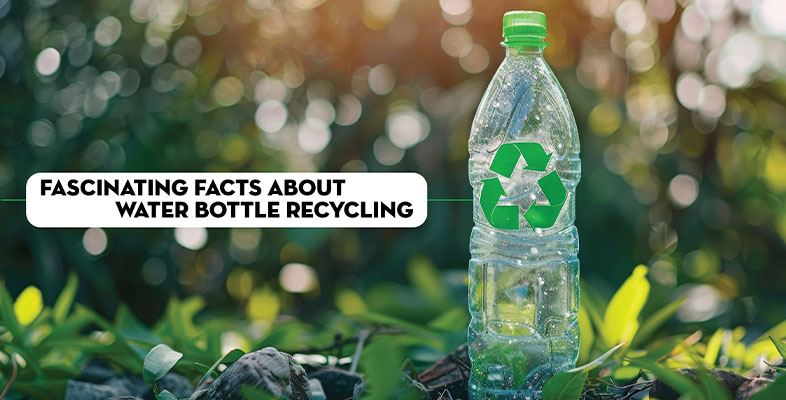
Over the decades, more plastic has been produced and consumed than in the entire century before. India alone produces 40,000 tons of plastic every day, of which only 60% can be recycled. Our Earth needs a radical revolution, and water bottle recycling has become a dire necessity. This is where plastic bottle recycling plants play a major role in reducing waste and promoting sustainability.
Even with these statistics, India outperforms many developed countries such as Europe, Japan, and the US, as mentioned in a year-long study conducted by scientists from CSIR – National Chemical Laboratory (NCL).
The secret to environmental sustainability lies in understanding a product's life cycle, from manufacturing to ethical disposal. Plastic bottles can be found everywhere—supermarkets, pharmacies, homes, offices, and unfortunately, as litter on streets and in oceans. Their complicated life cycle, from production to disposal, significantly impacts the environment.
This is why water bottle recycling and efficient plastic bottle recycling plants are the need of the hour. However, there is still limited awareness regarding plastic water bottle recycling. Learning the importance of water bottle recycling and the role of plastic bottle recycling plants can help individuals and industries make better choices for a greener future.
Plastic Bottle Recycling Plants Help Create a Wide Range of Products
PET (or PETE) virgin plastic is the main material used for manufacturing plastic water bottles. When recycled, PET becomes known as rPET, rePET, or rPETE, where “r” stands for recycled.
Modern plastic bottle recycling plants in India offer customized recycling solutions that help create sustainable packaging and reusable materials. Recycled PET from water bottle recycling is used in many products, including polyester carpet fiber, new water bottles, upholstery, t-shirts, fiberfill for sleeping bags, and industrial strapping.
This makes plastic bottle recycling plants an important part of the circular economy and sustainable manufacturing.
Most Plastic Water Bottles Can Be Recycled
Most plastic water bottles available for retail purchase are made from PET (polyethylene terephthalate). It is lightweight, durable, and classified as type-1 plastic, making it ideal for water bottle recycling.
The process inside plastic bottle recycling plants includes collecting bottles from central locations, sorting, cleaning, shredding with other PET products, and melting them into pellets. These pellets then serve as raw materials for manufacturing new plastic products.
Efficient plastic bottle recycling plants reduce landfill waste and support eco-friendly production systems.
Plastic Bottle Recycling Plants Reduce Environmental Impact
One of the biggest advantages of water bottle recycling is reducing plastic litter in streets, rivers, and oceans. Plastic bottles are not fully biodegradable and can take 450–1000 years to decompose naturally.
By supporting plastic bottle recycling plants, we reduce landfill waste and promote the circular economy principle. This process includes sourcing, production, retailing, usage, and recycling.
Plastic bottle recycling plants are not just waste management facilities—they are long-term environmental solutions that protect ecosystems and natural resources.
Water Bottle Recycling Saves 75% More Energy
Another major benefit of water bottle recycling is energy conservation. Manufacturing products from recycled plastic requires nearly 75% less energy compared to producing new plastic from raw materials.
Each step inside plastic bottle recycling plants helps save natural resources and reduces industrial emissions. Some estimates suggest that recycling plastic bottles can save enough energy to remove 360,000 cars from the road.
Additionally, water bottle recycling also saves water because producing new plastic bottles uses nearly six times more water than recycling existing ones.
Closing Thoughts on Water Bottle Recycling and Plastic Bottle Recycling Plants
It is high time we take environmental sustainability seriously. Water bottle recycling and advanced plastic bottle recycling plants offer practical solutions to many environmental problems caused by plastic waste.
Setting up modern plastic bottle recycling plants across the country is helping India move toward a cleaner and greener future. Improper disposal of plastic waste leads to environmental disintegration, but responsible recycling can reverse this damage.
With a mission to tackle this challenge, Pashupati Group—recycling giants—are solving one of the world’s most complex environmental problems: plastic waste. Through innovative plastic bottle recycling plants, they are transforming waste into wealth.
With quality, innovation, and sustainability as their core pillars, they are creating closed-loop solutions with an exceptionally low environmental footprint. Their commitment to Facts About Water Bottle Recycling, water bottle recycling, and advanced plastic bottle recycling plants is helping build a better and more sustainable tomorrow.
FAQs About Water Bottle Recycling and Plastic Bottle Recycling Plants
1. What is water bottle recycling?
Water bottle recycling is the process of collecting used plastic water bottles, cleaning them, shredding them, and converting them into reusable raw materials. This helps reduce plastic waste and supports environmental sustainability.
2. What are plastic bottle recycling plants?
Plastic bottle recycling plants are facilities where used plastic bottles are processed and transformed into recycled plastic materials like rPET pellets. These materials are then used to manufacture new products such as bottles, fibers, and packaging.
3. Why is water bottle recycling important?
Water bottle recycling helps reduce landfill waste, saves energy, conserves water, and lowers pollution. Since plastic bottles take hundreds of years to decompose, recycling is essential for protecting the environment.
4. Can all plastic water bottles be recycled?
Most plastic water bottles made from PET (Polyethylene Terephthalate) can be recycled. PET is a type-1 plastic that is lightweight, durable, and widely accepted by plastic bottle recycling plants.
5. How do plastic bottle recycling plants help the environment?
Plastic bottle recycling plants reduce plastic pollution in oceans, streets, and landfills. They also lower carbon emissions by reducing the need for virgin plastic production and promoting the circular economy.
6. How much energy does water bottle recycling save?
Water bottle recycling can save up to 75% of the energy required to produce new plastic bottles from raw materials. It also reduces water consumption significantly during manufacturing.
7. What products are made from recycled plastic bottles?
Recycled plastic bottles can be turned into new water bottles, polyester fibers, t-shirts, carpets, upholstery, industrial strapping, and fiberfill for bags and pillows.
8. How long does a plastic bottle take to decompose?
A plastic bottle can take around 450 to 1000 years to fully decompose naturally. This is why water bottle recycling is necessary for reducing long-term environmental damage.
9. What is rPET in plastic bottle recycling plants?
rPET stands for recycled Polyethylene Terephthalate. It is produced by recycling used PET bottles and is commonly used in manufacturing sustainable packaging and textile products.
10. How do plastic bottle recycling plants support sustainability?
Pashupati group plastic bottle recycling plants support sustainability by converting waste into reusable resources, reducing landfill burden, conserving natural resources, and promoting responsible waste management practices.
FAQ's
RECENT BLOGS
 (Large).jpg)